Category: Reflections

Accessible Resource Centre BC Presentation

The ARC-BC (Accessible Resource Centre BC) information session gave me a better understanding of the different considerations that go into making learning materials accessible for all students. One thing that stood out to me was just how many different ways we need to think about accessibility when creating or adapting resources. It is not simply about making sure students can read the information. We also need to consider visual accessibility, formatting, readability, and whether materials are compatible with tools such as text-to-speech programs. This made me realize that even small decisions when creating a worksheet, presentation, or assignment can have a significant impact on how accessible it is for different learners.
Another important takeaway for me was the number of supports and resources available to us as future educators. Sometimes, I think we can feel pressure to create everything ourselves or figure out how to accommodate every student independently. However, learning about the resources available through ARC-BC reminded me that we do not have to do everything alone. Making use of the supports available to us can make inclusion more manageable and help us provide students with materials that better meet their individual needs.

One area I did have some questions and concerns about was the amount of AI being incorporated into some of these accessibility programs. While I can recognize how AI can be helpful in adapting materials and making information more accessible, I also think there are important considerations surrounding its use. For example, I wonder how much choice parents and guardians have when it comes to allowing their children to use AI-supported accessibility tools. Some families may have concerns about privacy, technology, or the use of AI in their child’s education and may not feel comfortable giving permission for these tools to be used.

Overall, this session helped me recognize that accessibility involves much more thought than I initially considered. It also reinforced that inclusion does not have to be something we figure out entirely on our own. There are valuable resources available to help us create more accessible learning environments, but it is still important to think critically about the tools we use.
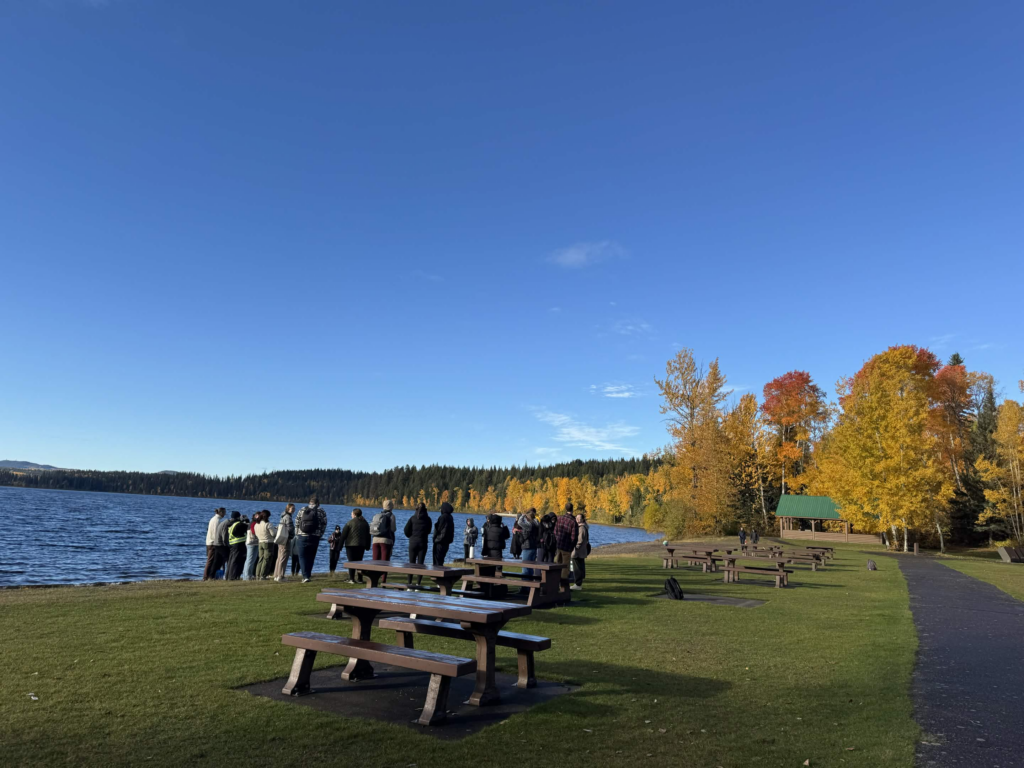
West Lake Reflection

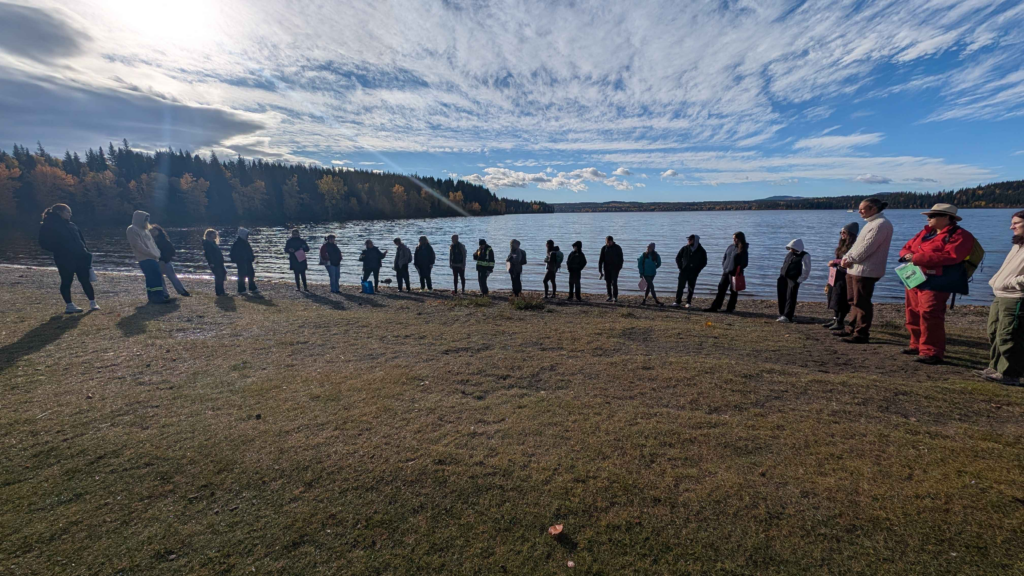
During our time at West Lake, we took part in a variety of activities using the idea of a walking curriculum. This gave us the chance to learn outside of a traditional classroom and use the environment around us as part of our learning. Each activity taught me something new, whether it was what we were doing, how the activity was organized, or what I could take away from the experience. It was interesting to see how much we could learn simply by being outside, exploring, and taking part in different activities.

One thing I took away from this experience was that learning does not always have to happen inside a classroom. Sometimes, getting outside and experiencing things firsthand can help us understand ideas in a different way. Instead of just hearing about something or reading about it, we had the chance to take part in activities and learn as we went. I think this is especially important when working with students because everyone learns differently. Some students may learn better by moving around, exploring, and being actively involved rather than sitting at a desk and listening to a lesson.

During our time at West Lake, we also discussed the First Peoples Principles of Learning and how they connect to our experiences. These principles focus on the idea that learning is connected to experience, relationships, place, and the world around us. They also highlight the importance of reflecting on what we learn and understanding that learning can be a personal and ongoing process.

The walking curriculum was a good example of how learning can be connected to place. Being at West Lake allowed us to experience our surroundings rather than just talk about the importance of learning outdoors. It encouraged us to pay attention to what was around us and think about what we could learn from the environment. It also reminded me that there can be learning opportunities in places we might not normally think of as classrooms. The outdoors can offer so many different ways to explore ideas, ask questions, and make connections.

Overall, my time at West Lake helped me see how valuable it can be to learn through experiences rather than always relying on traditional classroom activities. As well, this experience also got me thinking about how I could use a walking curriculum in my own teaching in the future. I think taking students outside can make learning more engaging and give them opportunities they might not get inside a classroom. Even a simple walk can turn into a learning experience if students are encouraged to look around, ask questions, and think about what they notice. It can also help students build a stronger connection to their surroundings and learn to appreciate the environment in a new way.

Beaded Tweets – Noelle Pepin

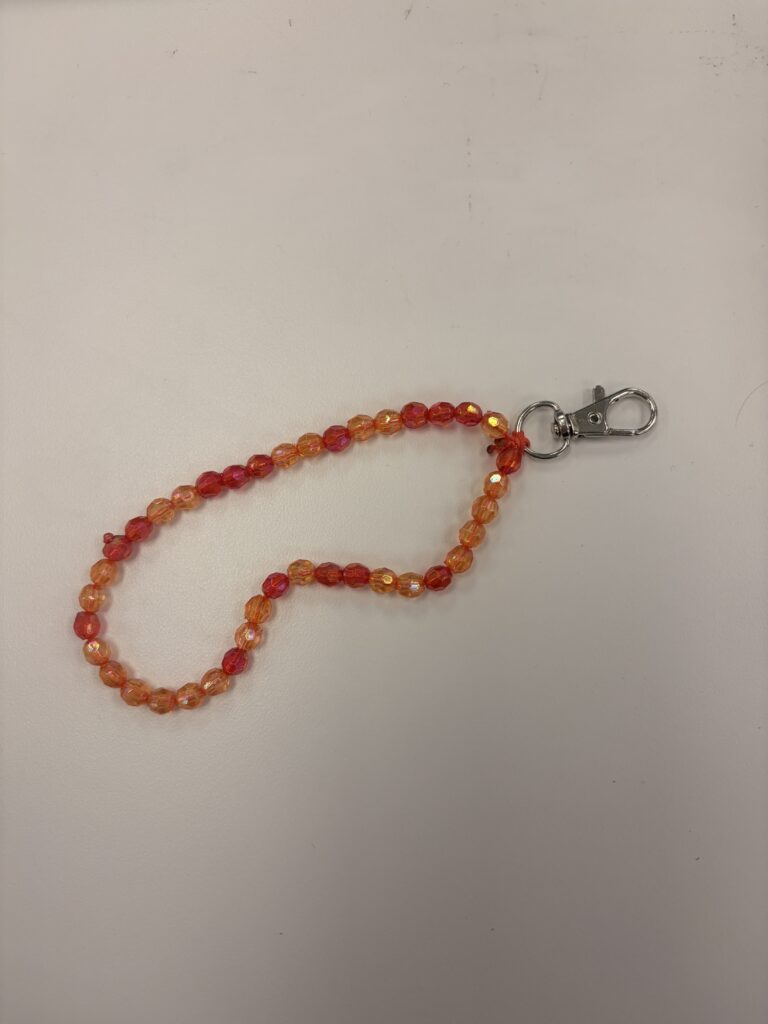
This week we had Noelle Pepin come in and share her research on “Beaded Tweets.” These beaded projects use binary code to represent letters and to then create beaded projects. This is a great example of one way you can blend Indigenous ways of knowing, as beadwork is common to many Indigenous cultures, and modern learning outcomes found in ADST (like coding).

I found the experience to be very interesting, as I have done some coding in the past and found it to be not engaging or interesting to me personally. I think something like this activity is great for teaching many ADST-related things, as it incorporates more than just one part of it. By incorporating something more artistic, having that social studies/Indigenous learning component, or incorporating things like story, these kinds of multi-disciplinary activities reach more students and are overall more engaging and enjoyable for more students.

I think this experience matters for so many reasons. For me personally, it allowed me to discover new ways of approaching subjects I am less interested in, both as a learner and teacher. By seeing a new way to bridge things I find interesting and those that I do not, I am able to then develop tools to help my future students also achieve this. As well, it showed me one way that I can include Indigenous knowledge and pedagogy into my learning and teaching. By having the activity be based in Indigenous knowledge, via the beading, but also via the act of teaching us about how one’s first beaded project should be a gift for another person, it allows for an organic method of incorporating Indigenous ways of knowing that doesn’t feel forced or ingenuine.

Overall, I found Noelle’s presentation to be important for my own learning and view of learning things I am unfamiliar with, as well as for finding new ways of approaching and incorporating Standard 9 in my teaching.

About Your Posts

Blog posts are formative and used for self-reflection.

Most of the resources in this e-portfolio are arranged in [Pages].  This entry is a [Post]. So DO NOT “edit” the page. Add a “new” post instead.

Some of the key differences between posts and pages are:

  • Posts are timely content part of a series of posts in a blog. Pages are static documents which are not tied to the blog’s reverse chronological order of content
  • Pages can be hierarchical, which means a page can have sub pages, for example a parent page titled “About us” can have a sub-page called “Our history”. On the other hand posts are not hierarchical.
  • By default posts in WordPress can be sorted into taxonomies Categories and Tags. Pages do not have categories or tags.
  • WordPress posts are displayed in RSS feeds while Pages are excluded from feeds.

Posts are a great way to record short reflections on a particular topic.  When you are ready to start adding posts to your ePortfolio delete this post and add your own.

In EDUC 394, we will be engaged in regular weekly reflections. Some learning experiences maybe prompted for the Professional Standards webpages, but learning that happened during each week, whether it be a reading, small group discussion, guest speaker, class-wide learning experience, etc., you can choose what learning had impacted or made an impression on you and your future practice as a K-12 educator.

Formative assessment means… to form and inform learning… so consider blog posts as an opportunity to use the e-portfolio platform and writing to reflect, sense-make, and wonder. The focus remains on your learning within EDUC 394 and the UNBC Teacher Education Program.

Success Criteria:

  1. A weekly 300-500 word reflection on the learning in EDUC 394.
  2. Describe the experience, what did you learn, and why it matters.
  3. Add an image, link, or quote to complement the text.
  4. Be compliant to the Professional Standards for BC Educators.

Powered by WordPress & Theme by Anders Norén