Educators respect and value the history of First Nations, Inuit and Métis in Canada and the impact of the past on the present and the future. Educators contribute towards truth, reconciliation and healing. Educators foster a deeper understanding of ways of knowing and being, histories, and cultures of First Nations, Inuit and Métis.
Participating in the Blanket Exercise was a really meaningful experience and gave me an opportunity to reflect on Standard 9. As future educators, we have a responsibility to understand and respect the histories, cultures, and experiences of Indigenous peoples, while also recognizing how the impacts of colonization continue today. Although I have learned about these topics through readings and school, actually taking part in the activity made everything feel much more real. It helped me recognize the importance of moving beyond simply knowing historical facts and developing a deeper understanding of the experiences and perspectives of Indigenous peoples.
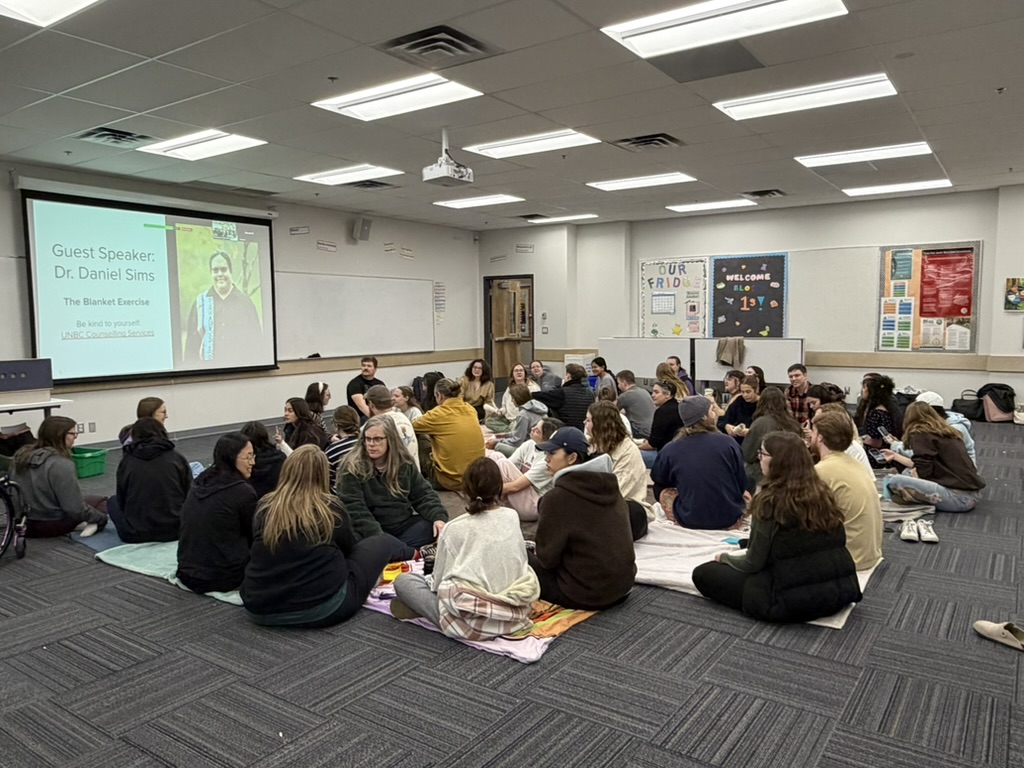
One of the most impactful parts of the activity was how the blankets represented the land and how they changed throughout the exercise. As we learned about life before colonization, treaty-making, and the impacts of colonization, the shrinking blankets showed how Indigenous peoples were forced off their land and separated from their communities. I felt that this activity really put the history into perspective because simply reading about these events does not fully capture the amount of suffering and loss Indigenous peoples experienced. I think this is an important consideration as a future educator because we need to find meaningful and respectful ways to teach Indigenous histories that help students understand the human experiences behind what they are learning.
Another part that stood out to me was when small portions of the blankets were unfolded to represent progress and changes that have been made over time. Although this progress was important, seeing how little of the blanket was unfolded compared to how much land had been lost was upsetting. The small portions almost felt like a joke in comparison to the amount that had been taken away. It made me think about how much has been lost and how the progress made so far can feel insignificant when compared to the harm caused by colonization. This part of the activity really stuck with me because it showed how much work still needs to be done. It also reminded me that truth and reconciliation require more than acknowledging past wrongdoings; they require continued learning, reflection, and meaningful action.
The activity also reminded me that colonization is not just something that happened in the past. Its effects are still felt by Indigenous peoples and communities today. I think this is especially important to understand as a future educator because we have a responsibility to teach students about Indigenous history in a respectful and meaningful way. Standard 9 reminds us that this responsibility involves more than including Indigenous content in our lessons. We also need to make space for Indigenous perspectives, ways of knowing, and ways of being. It is important that students learn about Indigenous experiences rather than only learning from textbooks or viewing colonization as something completely separate from the present. We also need to be willing to recognize gaps in our own knowledge and continue educating ourselves so that we can approach these topics with care and respect.
Overall, I found the Blanket Exercise to be a powerful learning experience that helped me understand Indigenous history on a deeper level. It reminded me that learning about difficult topics requires more than just reading information. Sometimes, we need experiences that help us connect with what we are learning and reflect on our own understanding. In the future, I hope to create similar opportunities for my students so they can learn, reflect, and develop a better understanding of Indigenous peoples and the ongoing impacts of colonization. Most importantly, I want to remember that contributing to truth and reconciliation is an ongoing responsibility, and that as an educator, I have a role in ensuring these histories and perspectives are respected, valued, and meaningfully represented in the classroom.