My education was, for the most part, easy and enjoyable. I loved learning and rarely encountered something that I truly struggled with or couldn’t understand, particularly when I was younger. However, I had many friends who struggled a lot in school, whether more generally or in specific subjects. I very often found myself helping them work through these struggles together, which made me more confident in the subject and aided them in their own learning journey. This ultimately led me to desire to become a teacher later in life.
One teacher who was really influential to me was my high school math teacher. Not because they were a great teacher, but because they were a great teacher for me, though not for many others. This teacher showed me the importance of meeting students where they are and finding the teaching style that works for their learning needs.
One learning experience that was particularly memorable for me was when I was in elementary school. I was particularly good at math, and as such was very confident and worked very quickly. So, when one day I was handed back a worksheet to redo, I was very confused as to what I did wrong (as the teacher didn’t mark anything right or wrong). I went through and checked my answers, trying to find the wrong one; it took me many attempts of looking it over to discover that, in my haste, I had missed an entire row of questions. I think I remember this as one of many instances where my weak spot in my learning was my own confidence in my strongest subjects. More accurately, my overconfidence, which led me to make mistakes.
My Teaching Metaphor:
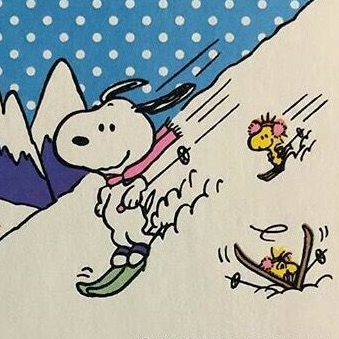
My experiences throughout my education thus far, particularly those discussed above, led me to choose “Skiing” as my metaphor for teaching.
I chose this metaphor because I love skiing, even though I have never considered myself to be particularly great at it. Learning to ski has taken me a long time, and there have been many skills and techniques that I have had to practice repeatedly before feeling comfortable with them. I still make mistakes, struggle on more challenging terrain, and have moments where I question whether I will ever become an expert, black-diamond-level skier. However, I have learned that being successful at skiing is not necessarily about being the best or reaching the most difficult level. Instead, it is about continuing to learn, practicing new skills, challenging yourself, and recognizing your own progress.
I think skiing works well as a metaphor for teaching because, just like skiing, learning does not look the same for everyone. Skiing may not excite or interest everyone, but almost anyone can potentially learn how to ski when they are given the appropriate instruction, support, time, and opportunities to practice. Similarly, students come into the classroom with different interests, abilities, experiences, and levels of confidence. Some students may quickly understand a concept, while others may need additional explanations, different strategies, or more time before they feel comfortable with it. As a teacher, I think it is important to recognize these differences rather than expecting every student to learn in exactly the same way or at exactly the same pace.
There are also different levels of skiing, ranging from beginner bunny hills to more challenging intermediate and advanced terrain. Each level requires different skills, and skiers need to develop a strong foundation before moving on to more difficult slopes. As well, even experienced skiers have opportunities to improve. Reaching an advanced level does not mean that there is nothing left to learn. There are always new techniques to practice, different types of terrain to experience, and skills that can be refined. I think teaching is much the same. Becoming a teacher does not mean that I will eventually know everything or have the perfect approach for every student. Instead, I will continue learning from my students, colleagues, experiences, and mistakes. Like skiing, teaching requires patience, practice, adaptability, and a willingness to keep improving.